

'연결·혁신·번영' 기본 틀…AI 협력·인구구조 변화 대응 의지도 담아
'AI 이니셔티브'·'인구구조 변화 대응 공동 프레임워크' 문서도 채택 -
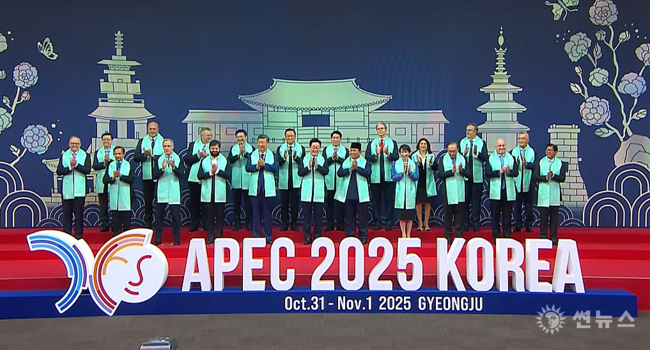
아시아·태평양경제협력체(APEC) 정상회의 이틀째인 1일 이재명 대통령 주재로 열린 '리트리트(Retreat)' 세션에서 회원 정상들은 'APEC 정상 경주선언'과 'APEC AI 이니셔티브', 'APEC 인구구조 변화 대응 공동 프레임워크' 등 총 3건의 문서를 채택했다고 대통령실은 밝혔다.
'리트리트(Retreat)'는 형식적 절차에 구애받지 않고, 회원 정상 간 유대 강화를 통한 자유롭고 심도 있는 의견교환의 장으로 운영되는 APEC 정상회의 세션이다.
먼저 '경주선언'은 올해 APEC의 3대 중점과제인 연결·혁신·번영을 기본 틀로, 무역·투자, 디지털·혁신, 포용적 성장 등 APEC의 핵심 현안에 대한 주요 논의를 포괄했다. 또한, 인공지능(AI) 협력 및 인구구조 변화 대응에 대한 회원들의 공동 인식과 협력 의지를 집약했다.
이 선언은 국제경제의 불확실성이 심화되는 가운데, 21개 회원들이 무역을 비롯한 주요 글로벌 경제 현안에 대해 포괄적 협력의 방향성을 제시했다는 점에서 의미가 크다. 이를 통해 APEC 회원들은 연대와 협력정신을 복원하고 아태지역 경제번영을 위해 함께 노력해 나갈 토대를 마련한 것으로 평가된다.
특히, 경주선언문은 문화창조산업을 아·태 지역의 신성장동력으로 인정하고 협력 필요성을 명문화했다. 이는 문화창조산업을 명시한 APEC 첫 정상문서로 향후 우리 K-컬처가 아·태 지역 내 성장동력으로 자리잡는 계기가 될 것으로 기대된다.
이재명 대통령은 이날 APEC 정상회의 마무리 기자회견에서 '경주선언'에 대해 "동적이며 평화로운 아태 공동체를 향한 APEC의 중장기적 미래 청사진, 그리고 푸트라자야 비전 2040 실현하겠다는 회원들의 의지를 담았다"며 "아태지역 회복과 성장을 위한 회원 간 협력 의지도 포함했다"고 설명했다.
특히 "혁신을 통해 혁신 통해 신성장 동력을 창출하고 성장의 과실을 고루 나누는 포용적 성장이 필요하다는 점을 강조했다"고 덧붙였다.
'APEC AI 이니셔티브'는 모든 회원이 AI 전환 과정에 참여하고, AI 기술 발전의 혜택을 공유할 수 있도록 ▲AI 혁신을 통한 경제성장 촉진 ▲역량 강화 및 AI 혜택 확산 ▲민간의 회복력 있는 AI 인프라 투자 확대 등을 주요 내용으로 담고 있다.
'APEC AI 이니셔티브'는 APEC 최초의 명문화된 AI 공동비전이자, 미국과 중국이 모두 참여한 AI에 관한 최초의 정상급 합의문이다. 특히, 'AI 기본사회 구현'과 '아시아·태평양 AI 센터' 설립 등 우리 정부의 AI 기본정책과 실질적 AI 협력 방안을 반영하고 있다는 점에서 의의가 있다.
이 대통령은 'APEC AI 이니셔티브'에 대해서는 "역내 모든 회원들이 인공지능 전환에 참여하고 그 혜택 함께 누리기 위한 여러 정책적 방향을 담았다"며 "특히 혁신을 통한 경제성장과 민간, 정부, 학계 등 이해관계자 간 협력 촉진, 인공지능 인프라 등을 강조했다. 이는 APEC 역사상 최초로 만들어진 인공지능에 대한 공동비전"이라고 했다.
'APEC 인구구조 변화 대응 공동 프레임워크'는 저출생·고령화 등 인구구조 변화가 역내 공통의 도전과제라는 인식에 따라 마련된 것으로, APEC 최초의 포괄적 인구협력 이니셔티브이다.
이 문서에는 ▲회복력 있는 사회시스템 구축 ▲인적자원 개발의 현대화 ▲기술기반 보건·돌봄 서비스 강화 ▲모두를 위한 경제역량 제고 ▲역내 대화·협력 촉진 등 5대 중점 분야별 정책 방향과 협력 방안을 담고 있다.
이를 통해 미래세대 고용 및 산업구조 변화에 대응하고, 청년역량 강화와 기술혁신을 통해 인구구조 변화를 새로운 성장 기회로 전환하기 위한 협력의 기반이 마련됐다고 대통령실은 평가했다.
우리 정부는 내년 'APEC 인구정책포럼'을 개최해 역내 협력과 정책 연계 강화를 지속 선도해 나갈 예정이라고 대통령실은 밝혔다.
이 대통령은 이번 APEC 정상회의에서 이 같은 문서들이 채택된 것에 대해 "아태지역을 평화와 번영 지역으로 만들겠다는 APEC 경제지도자들의 뚜렷한 의지가 함께 모였기에 가능했던 우리 모두의 성과"라면서 "이들 문서가 향후 APEC이 나아갈 길 분명히 제시할 것으로 자부한다"고 강조했다.
한편, 우리나라는 APEC 의장국으로서 지난 1년간 14차례의 각료급 회의에 이어, 정상회의 당일까지 문안 타결을 위해 밤샘 협상을 진행하며 미·중·일·러 등 회원간 입장 차이를 중재한 끝에 경주선언을 포함한 3건 모두 합의를 도출할 수 있었다고 대통령실은 전했다.
이번 정상회의를 통해 APEC은 포용적이고 지속가능한 성장, 혁신을 통한 번영, 인류 공동의 미래 대응력 강화라는 공동 목표를 향한 협력의 새로운 이정표를 세운 것으로 평가된다.
[첨부1] 2025 APEC Leaders' Gyeongju Declaration(원문)
1. We, the Economic Leaders of APEC, met in Gyeongju, the Republic of Korea, from October 31 to November 1, 2025. This year, under the APEC theme “Building a Sustainable Tomorrow,” we have advanced our shared objectives through three priorities — Connect, Innovate, Prosper — during our meetings across the Korean cities of Seoul, Busan, Jeju and Incheon, and culminating in Gyeongju, a thousand-year-old capital with rich cultural heritage.
2. The Asia-Pacific region stands at a pivotal juncture. We acknowledge the global trading system continues to face significant challenges. Further, the rapid advancement of transformative technologies such as artificial intelligence (AI), and demographic shifts that are reshaping labor markets, carry profound and long-term implications for APEC member economies. In this regard, we call for strengthened cooperation and concrete actions to enable economic growth that benefits all.
3. We underscore that current circumstances further demonstrate APEC’s importance and role as the premier forum for regional economic cooperation as well as an incubator of ideas. We will continue to be guided by our collective mission as set forth in the APEC Putrajaya Vision 2040, with the goal of realizing an open, dynamic, resilient, and peaceful Asia-Pacific community by 2040, for the prosperity of all our people and future generations including through the implementation of the Aotearoa Plan of Action.
Connect: Building the World’s Most Dynamic and Interconnected Regional Economy
4. We reaffirm our shared recognition that robust trade and investment are vital to the growth and prosperity of the Asia-Pacific region, and remain committed to deepening economic cooperation to navigate the evolving global environment. We acknowledge the importance of a trade and investment environment that promotes resilience and benefits for all. We note the various discussions on the current state and future of global trade and recognize the need for cooperation among economies in this regard.
5. We will advance economic integration in the Asia-Pacific region in a manner that is marketdriven, including through the work on the Free Trade Area of the Asia-Pacific (FTAAP) agenda. We will continue working together to enhance experience sharing, capacity building, business engagement, and technical cooperation efforts among members, aimed at strengthening member economies’ readiness to participate in high standard and comprehensive regional undertakings.
6. Recognizing the contribution of the services sector to economic growth, and the expanding role of digitally enabled services, we will continue to enhance the competitiveness of APEC economies in this sector. We take note of the role of the APEC Services Competitiveness Roadmap (2016-2025) in supporting effective reform and growth of the services sector in the APEC region.
7. We will continue to promote various trade facilitation efforts, such as measures to enhance
transparency, advance paperless trade and cross-border e-commerce, encourage deeper cooperation on standards and streamline conformity assessment procedures. We acknowledge the benefits of these efforts in lowering trade costs and facilitating the participation of micro, small and medium enterprises (MSMEs) in cross-border trade. We also recognize the potential of AI-enabled procedures in facilitating trade and encourage voluntary experience-sharing on AI adoption and related policies.
8. Acknowledging that global supply chains are facing multiple challenges, we support efforts to ensure resilient supply chains, as an integral part of global value chains, across the AsiaPacific region, including through greater engagement of the private sector in APEC’s relevant discussions. We reaffirm our commitment to implementing Phase Three of the Supply Chain Connectivity Framework Action Plan, strengthening regional and global connectivity to reduce the impact of disruptions, lower transaction costs, and promote trade. We will foster capacity building, technical assistance, and cross-border collaboration in support of these efforts.
9. We reaffirm our commitment to promoting innovation, productivity, and dynamism across the Asia-Pacific region, including through structural reform. We welcome the endorsement of the Strengthened and Enhanced APEC Agenda for Structural Reform (2026-2030) as a new and reinforced framework. We also welcome the endorsement of the Incheon Plan under the Finance Ministers’ Process.
10. We recognize the detrimental impact of corruption as a threat in that it transcends borders, distorts markets, erodes public trust and facilitates crimes, including organized crimes. We reaffirm that anti-corruption efforts must be more innovative, better coordinated, and more effective. We will continue our efforts to deny safe haven to corruption offenders and illicit assets.
11. We emphasize the importance of promoting connectivity in our region. In this regard, we note the work aligned with the APEC Connectivity Blueprint (2015-2025) including its ongoing final review to be concluded in 2026. Recognizing the importance of business exchanges in enhancing regional trade and investment, we welcome APEC’s efforts in facilitating business mobility and enhancing connectivity through the APEC Business Travel Card (ABTC), and encourage fully participating economies’ uptake and acceptance of the virtual ABTC. We also reaffirm the importance of quality infrastructure development and investment.
12. We acknowledge the positive contribution of the cultural and creative industries (CCIs) to economic growth, and affirm the importance of robust intellectual property protections. We recognize the increasing role of CCIs in the economic growth and their role in fostering peopleto-people ties as well as in encouraging better understanding and mutual respect among member economies in the Asia-Pacific. We also recognize the growing role of CCIs in economic and cultural exchanges in the region, and advances in digital technologies, including AI, are fostering creativity and enabling innovation across the entire process of creation, production, distribution, and consumption of cultural and creative products in the APEC region. We note that dialogue and cooperation among APEC economies in CCIs will contribute to economic growth in the region.
Innovate: Preparing the Region for the Digital and AI Transformation
13. We acknowledge that advancements in science and technology can contribute to addressing common challenges and create new drivers of growth in the APEC region. We also acknowledge that research and development collaboration, including partnerships among institutions, businesses and startups, including those related to Science, Technology and Innovation (STI), and voluntary exchanges of scientific talent and voluntary policy and knowledge sharing, as well as capacity building, can enhance the overall innovative capacity of the Asia-Pacific region and thereby contribute to its future economic growth.
14. We recognize that the innovation driven by digital transformation can play a critical role in enhancing connectivity, productivity and participation of all people and businesses across the Asia-Pacific region, thereby contributing to the realization of their full economic potential. We encourage member economies to enhance voluntary information sharing on ICT and digital policies that accelerate regional economic cooperation, as appropriate. We remain committed to the APEC Internet and Digital Economy Roadmap (AIDER), and note with appreciation this year’s work in advancing its effective implementation. We recognize the need to develop an approach that maximizes opportunities and address challenges in the rapidly evolving digital landscape, consistent with international law. We underscore the importance of bridging digital divides, improving digital connectivity, enhancing digital literacy, and making the benefits of digital transformation accessible to all, including by prioritizing capacity building, policies that build digital skills and competencies, and greater public-private collaboration. We also emphasize the importance of strengthening trust and confidence in the digital and AI ecosystem, for our people, workers, and businesses including MSMEs. Recognizing the increasing importance of data to digital economy, we will continue our cooperation on facilitating the flow of data and strengthening business and consumer trust in digital transactions.
15. We recognize the potential of AI to fundamentally reshape economies worldwide by unlocking new frontiers for innovation, enhanced productivity, improved competitiveness, economic prosperity and resilience. We hereby endorse the APEC AI Initiative as a joint step toward advancing successful AI transformation within APEC, building AI capacities at all levels, including through regional cooperation, and cultivating an investment ecosystem for resilient AI infrastructure. We also call for continued efforts to enhance security, accessibility, trustworthiness and reliability in realizing the benefits of AI for all with balanced and humancentered approaches to our workforce, education, and capacity building policies. We encourage economies to explore collaborative approaches toward the benefits of AI transformation for and meaningful participation by all in the AI-driven economy, thereby laying the foundation for a society where everyone benefits from technological advancements and AI is leveraged to enhance the well-being of all our people.
Prosper: Addressing Challenges Together and Sharing the Benefits of Growth with All
16. We affirm the importance of ensuring that opportunities and benefits of growth and prosperity are enjoyed by all in the Asia-Pacific. In this regard, we recognize APEC’s prior and ongoing work to address barriers to economic participation and promote economic empowerment for all, and to create an environment for resilient economic growth.
17. We reiterate the importance of fostering an enabling business environment for MSMEs and startups to grow, including through supporting entrepreneurship, removing regulatory barriers, enhancing supply chain networks, strengthening connectivity among key stakeholders, including with large companies, and unlocking opportunities to improve their productivity, efficiency, and ability to innovate. We also note efforts made by the economies to promote the development of MSMEs, such as through the Lima Roadmap to Promote the Transition to the Formal and Global Economies (2025-2040).
18. Ongoing demographic changes, characterized by declining birth rates, aging populations and accelerated urbanization, are bringing about fundamental and long-term transformations to the Asia-Pacific economy and community. We recognize that the wide-ranging economic impacts of demographic changes call for our collective response through holistic and intergenerational policies. In this regard, we endorse the APEC Collaborative Framework for Demographic Changes, through which we reaffirm our commitment to working together to unlock new opportunities to maximize economic growth and prosperity for all in the Asia-Pacific region. Acknowledging that the region’s future prosperity depends on empowering our next generation, we look forward to continuing to provide young people with the opportunities for development and tools to actively shape their futures.
19. We will intensify our cooperation and coordination to effectively respond to global challenges including energy, food security, the environment, and extreme weather events and natural disasters, to build a more resilient Asia-Pacific. Noting the rising demand for electricity across the APEC region, we recognize the need to ensure a stable power supply and encourage economies to diversify their power sources and technologies, support necessary investment, and foster technological innovation, while enabling efficient market operation and the marketbased instruments, such as power market design and energy attribute certificates, to enhance power system flexibility, resilience, and stability, in line with domestic circumstances and priorities. We acknowledge the important role that natural gas and LNG can play in providing sustainable, secure, affordable, and reliable energy as well as flexibilities in our respective energy systems. Recognizing the vital importance of modernizing and expanding electricity infrastructure to strengthen energy security, we acknowledge that enhancing grid infrastructure and deepening regional interconnectivity can foster more efficient and reliable grids. We note discussions on renewable energy and energy intensity. We also note the innovative potential of AI in the energy sector.
20. We underscore the importance of strengthening food security through minimizing food supply chain disruptions, promoting productive, resilient and innovative agri-food systems, and preventing and reducing food loss and waste, as well as the efficient use of agricultural resources, recognizing there is no “one-size-fits-all” approach.
21. We will also collaborate to improve the resilience of marine and coastal communities and promote the conservation and management of ocean resources, including by combating illegal, unreported, and unregulated fishing and addressing the growing challenge of marine debris, while leveraging science- and technology-based approaches.
22. We reiterate our commitment to building resilient, sustainable, accessible, age-responsive, multisectoral, and future-ready health and care systems across the region, while acknowledging the innovative potential of digital health and AI to enhance patient-centered health service delivery, early detection, diagnosis, treatment, and overall health outcomes. In this regard, we welcome efforts to promote access to the benefits of digital technologies, such as AI, to improve health for all and call for stronger collaboration to broaden access to digital health tools and domestic capacity-building in this field. Recognizing disaster risk management is a pivotal foundation for economic growth, we endeavor to secure a safe and resilient future.
Looking Ahead
23. We recognize that robust multi-stakeholder engagement is one of APEC’s unique features that enhances its function as an incubator of ideas. We look forward to further strengthening multi-stakeholder engagement, as appropriate, including with APEC Business Advisory Council and Pacific Economic Cooperation Council, such as through the APEC CEO Summit among other events.
24. We thank the Republic of Korea for hosting the 2025 APEC Ministerial Meeting and the Ocean-Related, Human Resources Development, Education, Trade, Digital and AI, Food Security, Women and the Economy, Energy, Small and Medium Enterprises, Health and the Economy, Finance and Structural Reform ministerial meetings, as well as high-level dialogues on Anti-Corruption Cooperation and Cultural and Creative Industries. We commend the outcomes of the 36th APEC Ministerial Meeting as an important basis for future cooperation.
25. We thank the Republic of Korea for successfully hosting APEC in 2025. We also express our sincere appreciation to the people and city of Gyeongju for the warm hospitality and thorough preparations for the Leaders’ Meeting. We look forward to the upcoming APEC host years of the People´s Republic of China (2026), Viet Nam (2027), Mexico (2028), Singapore (2030), Japan (2031), Chile (2032), Papua New Guinea (2033) and Peru (2034).
